


How to Maintain Refinished Hardwood Floors Long Term

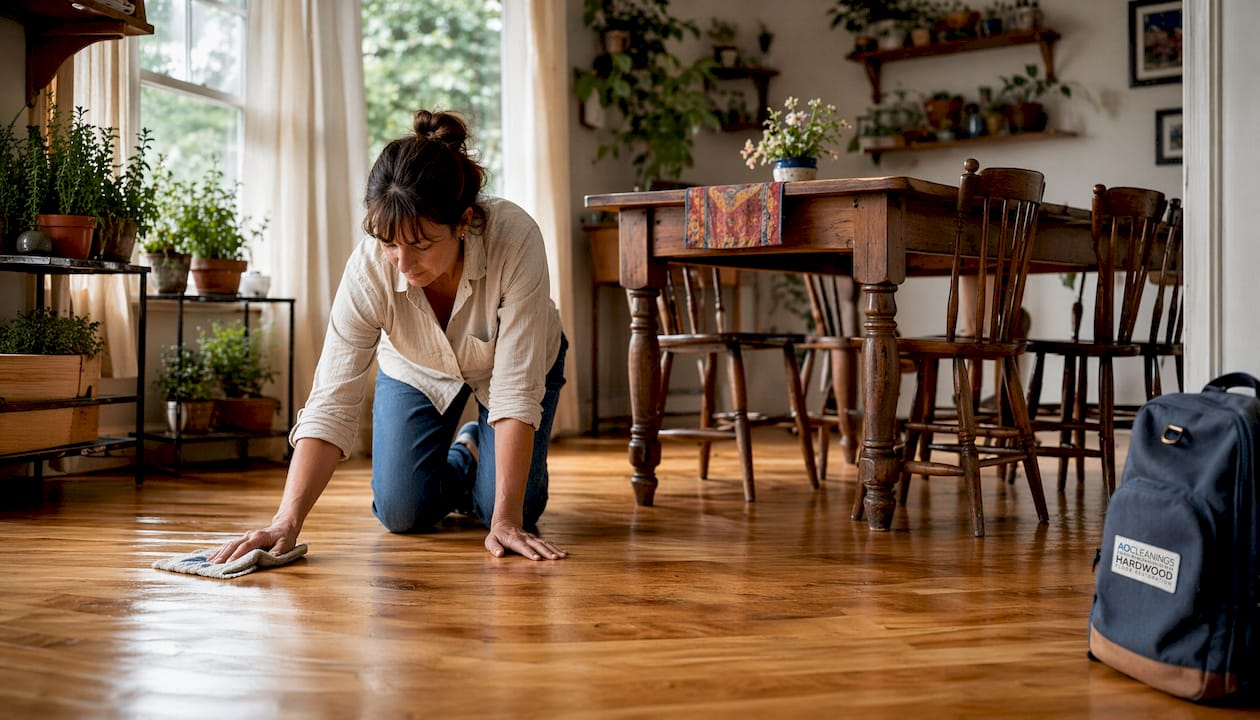
Essential long-term care tips for refinished hardwood floors
Protecting your refinished floors comes down to a handful of consistent habits. The NWFA confirms that solid hardwood maintained with periodic recoating can last many decades, versus significantly shorter lifespans without proper care. Start here:
Sweep or dust-mop daily to keep abrasive grit off the finish
Use only pH-neutral, manufacturer-approved hardwood cleaners
Keep indoor humidity between 35% and 55% year-round
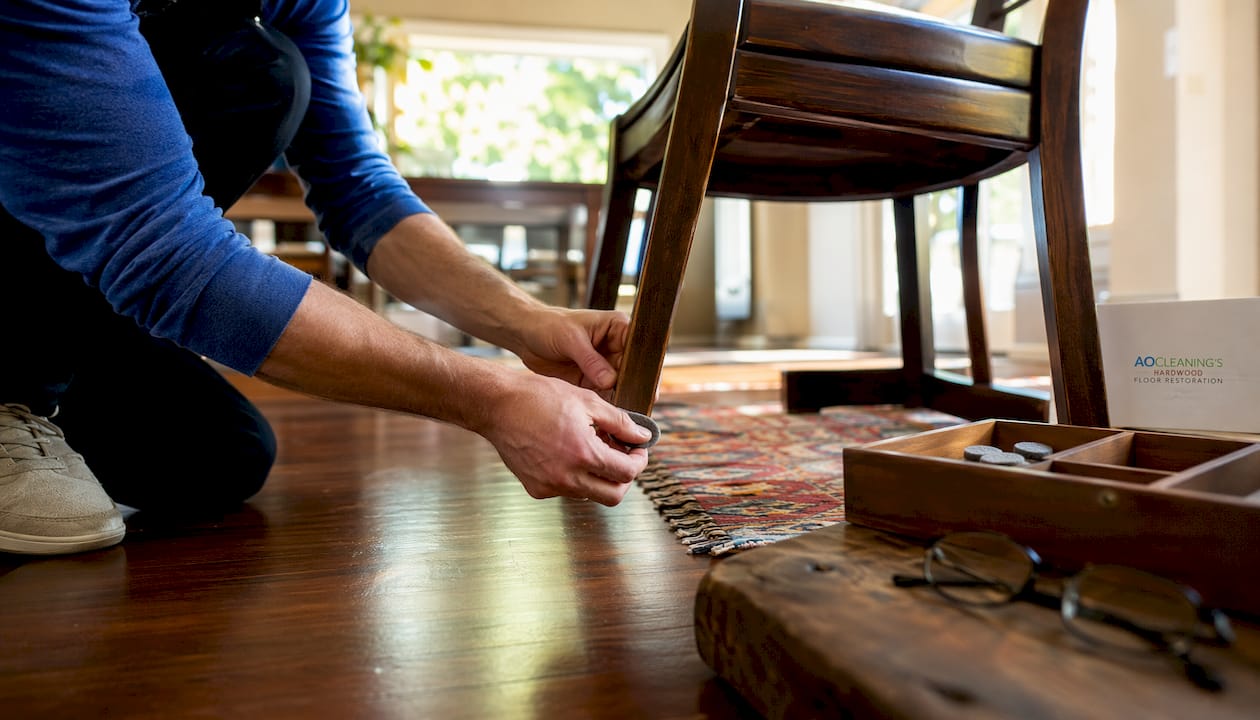
Place felt pads under every furniture leg and replace them regularly
Enforce a no-shoes policy, especially with hard-soled footwear
Schedule a professional screen and recoat every 3–5 years
Watch for uneven sheen, peeling, or water stains and act before damage deepens
These steps work together. Skip one consistently and the others carry more load than they should.
How indoor humidity and temperature protect your floors
Wood moves. It expands when humid and contracts when dry, and a finish that flexes too far eventually cracks or peels. Maintain stable, moderate indoor humidity and temperature year-round for best floor protection.
Summer: Run air conditioning or a dehumidifier to prevent swelling and cupping
Winter: Use a humidifier to stop boards from shrinking and gapping
Year-round: A digital hygrometer (under $20 at most hardware stores) gives you a real-time read on conditions
Avoid sudden swings; gradual changes are far less damaging than rapid ones
Keep HVAC vents from blowing directly onto floor surfaces
Stable conditions don’t just protect the wood. They extend the life of the finish coating itself, which means fewer recoats and a longer gap before a full refinish becomes necessary.
Pro Tip: Place your hygrometer in the room with the most floor traffic, not a closet or hallway. That reading reflects actual conditions where wear happens.

What to do and avoid in the first 7 days after refinishing
The finish feels dry within hours, but it isn’t fully cured. That distinction matters for how you treat the floor during the first week. Moisture and foot traffic during curing can prematurely dull or wear the new coating.
Do:
Wait at least 24 hours before any foot traffic, 48 hours before resuming normal activity
Walk in socks only during the first week
Keep temperature and humidity stable throughout the curing period
Use a dry dust mop if light cleaning is needed
Avoid:
Rugs, mats, or floor coverings for at least 7 days (they trap moisture and block curing)
Shoes, especially heels or hard soles
Any wet cleaning, including damp mopping
Placing furniture without felt pads
Rushing this stage is the most common mistake homeowners make. A few extra days of caution here pays off in years of better-looking floors.
How to prevent scratches, dents, and surface damage
Physical damage is the finish’s biggest daily enemy. Grit tracked in on shoes acts like sandpaper with every step, and dragging a chair leg across the floor can cut through the finish in a single move.
Attach felt pads to every furniture leg, including chairs that move frequently, and check them monthly
Always lift furniture when repositioning it, never slide it
Trim pets’ nails regularly; even a cured finish scratches under sharp claws
Place breathable rug pads (not rubber-backed) in high-traffic zones after the curing period ends
Use entry mats at every exterior door to catch grit before it reaches the floor
For homeowners thinking about durable home surfaces throughout the house, the same principle applies everywhere: prevention costs far less than repair.
Safe cleaning methods and the best products for hardwood care
The wrong cleaner does more damage than dirt. Vinegar, ammonia, oil soaps, and steam mops all degrade the finish over time, and some void manufacturer warranties outright.
Safe practices:
Vacuum with the beater bar disabled, or use a soft-bristle attachment
Damp-mop with a microfiber pad, never a soaking-wet mop
Clean spills immediately with a dry cloth, then a barely damp one if needed
Work in small sections and let each area dry before moving on
Products to use:
pH-neutral cleaners approved by your finish manufacturer
Spray-and-wipe formulas that evaporate quickly
Products to avoid:
Vinegar or any acidic solution
Ammonia-based cleaners
Wax or oil-based products
Steam mops (heat and moisture warp wood and lift finish)
For a trusted option, Aosaveswoodfloors carries the AO Hardwood Neutral Cleaner, a pH-neutral formula designed specifically for finished hardwood. Check the best cleaning products guide for a broader breakdown of what works and what to skip.
Long-term maintenance schedules and expected floor lifespan
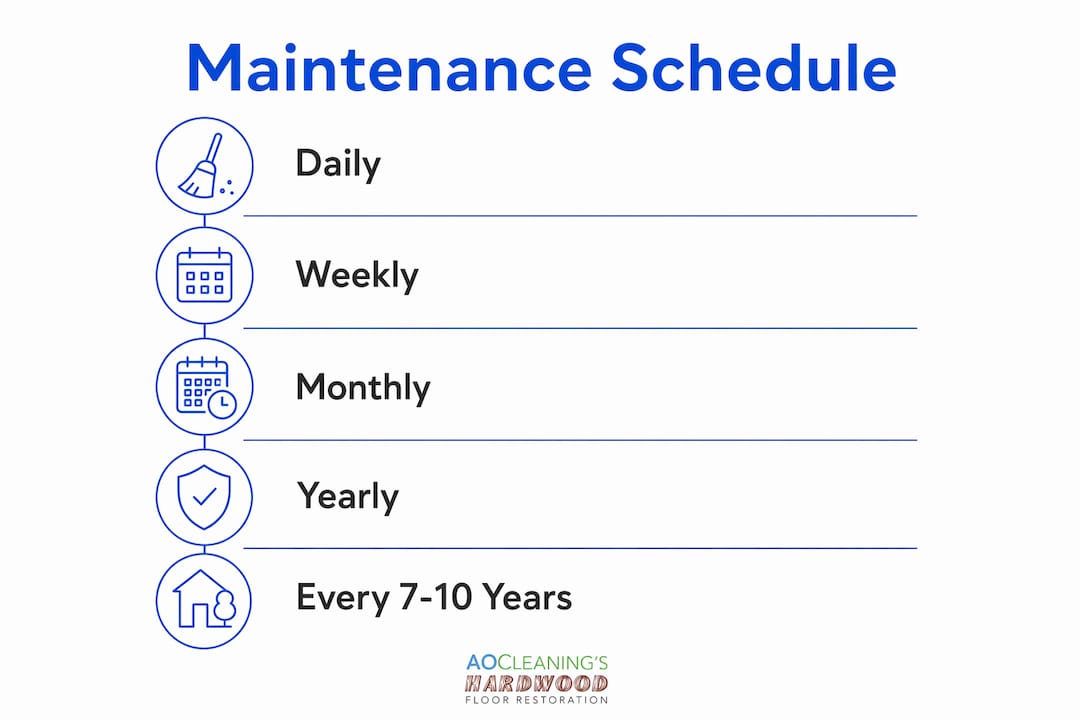
A refinished floor doesn’t need constant attention. It needs the right attention at the right intervals. Here’s how a realistic schedule looks:
Frequency | Task |
Daily | Dry dust-mop or sweep high-traffic areas |
Weekly | Vacuum (beater bar off) and spot-clean spills |
Monthly | Inspect and replace worn felt pads |
Seasonally | Check humidity levels and adjust accordingly |
Every 3–5 years | Professional screen and recoat |
Every 7–12 years | Full sand and refinish (well-maintained households) |
Regular screen and recoat can push the full refinishing cycle from 7–10 years out to 15–20 years. That’s fewer sandings, less cost, and more of the original wood preserved. See the refinishing frequency guide for a deeper look at timing by traffic level and floor type.
Signs that maintenance is overdue: uneven sheen across the floor, finish peeling or flaking, water stains that won’t wipe away, or worn-through areas in traffic lanes.
Expert insights on screen and recoat as a cost-effective strategy
Think of a full refinish as an engine rebuild and a screen and recoat as an oil change. The NWFA frames it exactly that way: proactive maintenance costs less and prevents the damage that forces expensive intervention later.
Screen and recoat lightly abrades the existing finish and adds a fresh topcoat, no sanding to bare wood required
When done periodically, it extends finish life by several years per treatment
Homeowners who recoat consistently can go 15–20 years before needing a full refinish
Waiting until the finish fails means full refinishing becomes the only option, at significantly higher cost and disruption
The process typically takes one day with minimal dust, far less intrusive than a full sand-down
Pro Tip: Don’t wait for visible dullness to schedule a recoat. If your floors were refinished 3 years ago and see daily traffic, book an evaluation now. Catching the finish before it wears through is the whole point.
The 7 pro tips guide from Aosaveswoodfloors covers what you can do between professional visits to stretch that recoat interval as long as possible.
Minor repairs and when to call a professional
Small problems are fixable. The trick is catching them before they become structural.
DIY-appropriate repairs:
Surface scratches that haven’t broken through the finish: a touch-up marker or blending pencil matched to your floor color can minimize visibility
Minor scuffs: a small amount of finish-compatible cleaner on a soft cloth often buffs them out
Squeaky boards: a dry lubricant like powdered graphite worked into the seam usually quiets the noise without opening the floor
Call a professional when you see:
Finish peeling or flaking in patches
Dark water stains or black discoloration (signs moisture reached bare wood)
Deep gouges that penetrate the wood itself
Cupping, warping, or boards lifting at the edges
Uneven sheen that doesn’t respond to cleaning
Early professional intervention consistently prevents the kind of damage that turns a recoat job into a full refinish, or worse, a replacement. If you’re in the St. Louis metro or central Illinois area, Aosaveswoodfloors has been diagnosing and restoring floors since 2003, with over 450 Google reviews backing their work.

Ready to protect your investment? Aosaveswoodfloors offers screen and recoat, full refinishing, and their own AO Hardwood Neutral Cleaner to keep your floors looking their best between professional visits.
Key Takeaways
With consistent maintenance including timely recoating, solid hardwood floors can last 80–100+ years, according to the NWFA.
Point | Details |
Humidity control | Keep indoor humidity between 35% and 55% year-round to prevent warping and finish failure. |
First-week curing | Avoid rugs, wet cleaning, and shoes for 7 days after refinishing to let the finish cure properly. |
Screen and recoat timing | Schedule a professional recoat every 3–5 years to extend finish life and delay full refinishing. |
Safe cleaning products | Use only pH-neutral, manufacturer-approved cleaners; avoid vinegar, ammonia, steam mops, and wax. |
Know when to call a pro | Peeling finish, dark water stains, or cupping require professional assessment before damage spreads. |
Recommended

Comments