


How to Stop Floor Refinishing Odor Concerns With Real Solutions


The fastest way to solve floor refinishing odor concerns is to pick a water-based, low-VOC finish and run aggressive cross-ventilation paired with activated-carbon filtration for the first 72 hours. That window is when off-gassing peaks, and it’s when your effort pays off most.
A few things to know going in:
Water-based finishes clear faster and smell less than oil-based or moisture-cure products.
Vinegar bowls and baking soda don’t remove solvent vapors. They only mask them, and briefly.
If anyone in the house has asthma, chemical sensitivity, or is pregnant, plan to leave during application and for the first day or two of curing.
Everything below explains why this works and how to set it up room by room.
Key Takeaways
Controlling floor refinishing odor comes down to choosing a low-VOC finish, running real ventilation and carbon filtration for 72 hours, and hiring a contractor whose dustless technique prevents trapped vapors in the first place.
Point | Details |
Choose water-based finish | It clears faster and smells less than oil-based, which can linger up to two weeks. |
Build a real wind tunnel | Angle two fans low across the floor, pulling air across and out, not just circulating it. |
Use carbon, not just HEPA | HEPA traps dust but not gas-phase VOCs; you need activated carbon for actual odor removal. |
Treat fabrics separately | Launder what you can and use enzyme cleaners on upholstery that absorbed vapor. |
Hire dustless professionals | Aosaveswoodfloors’s dustless sanding and eco-friendly products reduce the trapped particulate that holds odor. |
Table of Contents
Planning Ahead: Finish Selection and Scheduling Before the Job Starts
What Happens During the Job: Ventilation and Dust Control That Actually Work
After the Coats Go On: Filtration, Timing, and Fabric Cleanup
Why the Dustless, Professional Approach Actually Changes the Odor Equation
Get a Dustless Refinishing Job That Cuts Your Odor Problem Before It Starts
Planning Ahead: Finish Selection and Scheduling Before the Job Starts
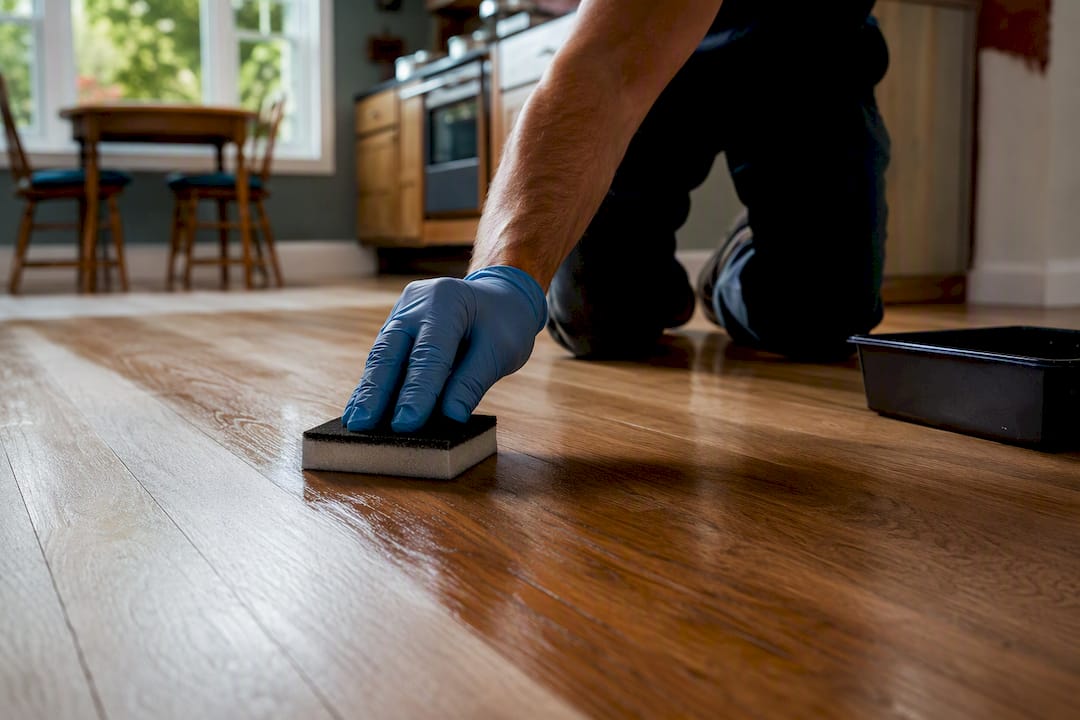
The single biggest lever you control is which finish goes on your floor. Water-based polyurethane produces noticeably less odor and clears faster than oil-based alternatives, which can take up to two weeks for smell to fully dissipate, according to guidance from Kenton Magazine. Oil-based finishes still have their place for high-traffic commercial floors, but for a home where people are sleeping down the hall, water-based is almost always the smarter call. If you want a deeper breakdown of how different types of hardwood floor finishes compare on durability and odor, it’s worth reading before you sign a contract.
One finish to avoid outright in an occupied home is moisture-cure urethane. The NYC Health Department specifically warns that these products can emit strong solvents and recommends vacating the premises entirely until curing finishes. If a contractor suggests an MCU for your living room, ask why, and get a second opinion.
Before you book anyone, ask these questions:
Do you use dustless sanding equipment, and what containment do you set up?
What’s the VOC rating printed on the product label, and can I see the can?
How thick will each coat be, and how many coats total?
What’s the manufacturer’s stated cure time for this specific product?
Can we schedule room by room, so part of the house stays livable?
Temperature matters more than most homeowners realize. Rooms kept between 65 and 75°F off-gas faster and more predictably; a cold room can stay tacky, and smelly, far longer than expected, per ParquetDeck. If your refinishing job lands in a chilly month, don’t turn the heat off to save money on the day of the job.
Pro Tip: Schedule the job to start early in the week. That gives you two full weekend days of aggressive ventilation before anyone has to go back to a normal work and school schedule.
Anyone with respiratory issues, small children, or pets should have a place to stay for at least the first day. A refinishing checklist built specifically for this stage helps you avoid the scramble of figuring this out the morning the crew arrives.
What Happens During the Job: Ventilation and Dust Control That Actually Work
This is where most of the odor either gets controlled or gets baked into your walls, curtains, and upholstery. Two things happen simultaneously during sanding and coating: fine dust gets kicked into the air, and solvent vapors start releasing from the wet finish. Both need separate solutions.
Dustless sanding matters more here than people expect. Fine sanding particulate doesn’t just make a mess. It traps odor-bearing solvents and carries them through the house on air currents, according to Kenton Magazine’s reporting on containment techniques. A contractor running proper dust containment, similar to the low-dust approaches used in door replacement projects, keeps that particulate from ever reaching your bedrooms or kitchen.
For vapor control, set up what industry pros call a wind tunnel. Here’s the actual mechanics of it:
Place one high-velocity fan in a window or doorway on one side of the room, angled so the airflow sweeps low across the floor surface, where the vapors concentrate.
Position a second fan at the opposite end of the room, pulling air out through another window or door.
Keep interior doors to unrelated rooms closed so vapors don’t drift into bedrooms or closets.
Run this setup continuously, not intermittently, for the full first day.
A properly built wind tunnel with two angled fans clears solvent vapors off the wood surface far faster than a single window fan left running on its own, per ParquetDeck’s testing.
Ventilation plus activated-carbon filtration together can cut VOC concentration by up to 80% within 72 hours, according to that same ParquetDeck analysis. Fans alone move air. Carbon filtration actually adsorbs the gas-phase compounds fans just push around.
Your HVAC system can help, but only if used correctly. Running the fan-only setting circulates air, which is useful, but it can also pull vapors into ductwork and distribute them to rooms nowhere near the job site. Canlak Coatings points out that exchanging indoor air for clean outdoor air is the only reliable way to actually remove solvent vapors, not just move them around your house. Close the supply vents in the refinishing room and rely on your window fans instead.
One more thing worth insisting on: don’t let the crew lay on heavy coats to save a trip back. Over-application dramatically extends off-gassing time, and following the manufacturer’s stated coverage rate matters as much as which product they chose, according to Canlak’s technical guidance. If you notice the finish looking thick or glossy-wet well past when it should be tacky-dry, ask about it.
After the Coats Go On: Filtration, Timing, and Fabric Cleanup
Ventilation gets you most of the way there, but the finish tail end of odor removal comes down to filtration and patience. HEPA filters are excellent at trapping dust, but they do essentially nothing for gas-phase VOCs, which pass right through them, according to ParquetDeck’s comparative testing. You need activated carbon specifically.
Not all carbon filters pull their weight. For a mid-sized room, you generally want a unit with several pounds of actual carbon mass and airflow of at least 200 CFM to see measurable VOC reduction, based on ParquetDeck’s testing notes. A cheap desktop purifier with a thin carbon sheet inside won’t touch a freshly coated floor’s vapor load.
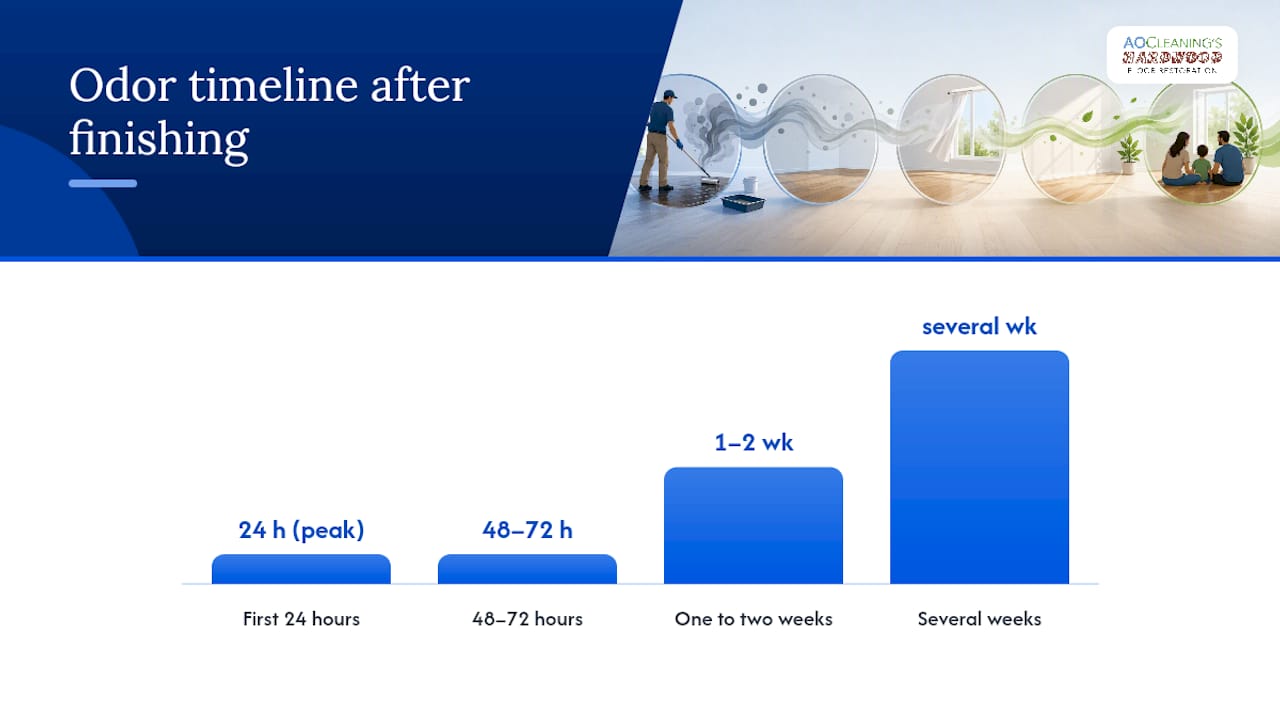
Here’s a realistic timeline to set expectations:
First 24 hours: Peak odor. Ventilation and filtration matter most right now.
48 to 72 hours: Most of the smell drops off sharply if you’ve run fans and carbon filtration aggressively, per ParquetDeck.
One to two weeks: Light residual smell may linger, especially with oil-based finishes.
Several weeks: Full chemical cure completes, even though the floor feels dry and looks finished. Check polyurethane cure time guidance before moving furniture back too aggressively.
Soft furnishings absorb vapors just like the air does, and rugs, curtains, and upholstered furniture can become secondary odor sources for days after the floor itself has calmed down. Launder anything machine-washable. For anything you can’t toss in a washer, an enzyme-based fabric cleaner breaks down odor molecules rather than covering them. Professional ozone treatment is an option for stubborn cases, but it has to be handled by a trained technician, and the room must be fully evacuated during treatment, according to ParquetDeck’s guidance on the process.
Pro Tip: Before you move furniture back, run a hand along baseboards and corners. Uncured drips feel tacky and hold odor far longer than the rest of the floor. If you find one, ask your contractor which solvent is safe for spot cleanup, since using the wrong product can strip or discolor the finish.
Why the Dustless, Professional Approach Actually Changes the Odor Equation
Homeowner-managed ventilation only works as well as the job underneath it. A sloppy sand job with heavy dust and uneven coat thickness will overwhelm even a great wind tunnel setup. This is where the contractor’s technique matters as much as anything you do at home.
Aosaveswoodfloors has served homeowners across central Illinois and the St. Louis metro area since 2003, and the company’s dustless techniques exist specifically to prevent the particulate buildup that traps and spreads odor through a house. That track record shows up in the numbers: over 20 years in business and more than 450 Google reviews.
What that looks like in practice:
Dustless sanding equipment that contains particulate at the source instead of letting it drift room to room, similar in principle to the dustless sanding process many homeowners never see explained clearly elsewhere.
Eco-friendly product lines chosen to reduce the harsh solvent load compared to standard oil-based systems.
Most restoration jobs completed in a single day, with floors safe to walk on in about three hours.
Services covering everything from a quick clean and buff to full sand and refinishing, screen and recoat, and even countertop cleaning, polishing, and sealing.
A job done right the first time means less odor for you to manage on the back end, no matter how good your fans are.
The Fix Most Homeowners Get Backwards
The advice you’ll find everywhere treats odor as something to survive after the fact: crack a window, wait it out, maybe run a candle. That’s backwards. The actual leverage point is upstream, at finish selection and contractor technique, not downstream at your air freshener collection.
What gets overlooked constantly is how much the sanding process itself contributes to the smell problem. Everyone focuses on the wet finish, but trapped dust from a non-dustless job holds solvent vapors and re-releases them for days after the floor looks dry. If you fix that variable first by insisting on dustless technique, your ventilation plan has far less to clean up.
My honest read: don’t try to out-fan a bad finish job. Pick water-based, insist on dustless sanding, then build your wind tunnel and carbon filtration on top of that foundation. Skipping the first two steps and relying purely on airflow is the single most common mistake homeowners make, and it’s the one that turns a 72-hour inconvenience into a two-week ordeal.
Get a Dustless Refinishing Job That Cuts Your Odor Problem Before It Starts
The real fix for floor refinishing odor concerns isn’t a better fan. It’s hiring a crew whose sanding process doesn’t generate the trapped dust that holds odors in the first place. Aosaveswoodfloors has been doing exactly that across central Illinois and the St. Louis metro area since 2003, using dustless techniques and eco-friendly products so you’re not managing lingering smells for weeks after the crew leaves.
Most jobs wrap up in a single day, with floors walkable in about three hours, which means far less time your household needs a ventilation plan running at all. Whether you need a full sand and refinishing job or a quicker screen and recoat, the team plans room-by-room scheduling so part of your home stays fully livable during the work. If you’ve been putting off refinishing because you’re dreading the smell, call Aosaveswoodfloors for a consultation and ask specifically about their dustless process before you book anyone else.
Frequently Asked Questions
How long does floor refinishing odor concerns typically last after a job? Most of the smell drops off within the first 72 hours if you run aggressive ventilation and carbon filtration. Light residual odor can linger one to two weeks, especially with oil-based finishes, while full chemical cure can take several weeks even after the floor feels dry.
Can I stay in my house during floor refinishing? Often, yes, especially with water-based finishes and room-by-room scheduling. But if anyone in the household is chemically sensitive, asthmatic, or pregnant, plan to vacate during application and the first day of curing, and never stay in the house if a moisture-cure urethane is being used.
Do baking soda or vinegar actually remove refinishing smells? No. These masking agents cover odor briefly but don’t remove the actual solvent vapors in the air. Air exchange and activated-carbon filtration are the only methods that address the source.
Is a HEPA air purifier enough to clear refinishing odor? Not on its own. HEPA filters trap dust particles well but do nothing for gas-phase VOCs. You need a purifier with substantial activated carbon mass and strong airflow, generally at least 200 CFM, to see real odor reduction.
Which finish produces the least odor for an occupied home? Water-based polyurethane is generally the best choice for homes where people are staying during and after the job. Avoid moisture-cure urethanes entirely in occupied spaces, since public health guidance recommends vacating the premises when these products are used.
Sources
Recommended

Comments