


Why Hardwood Outlasts Other Flooring Types

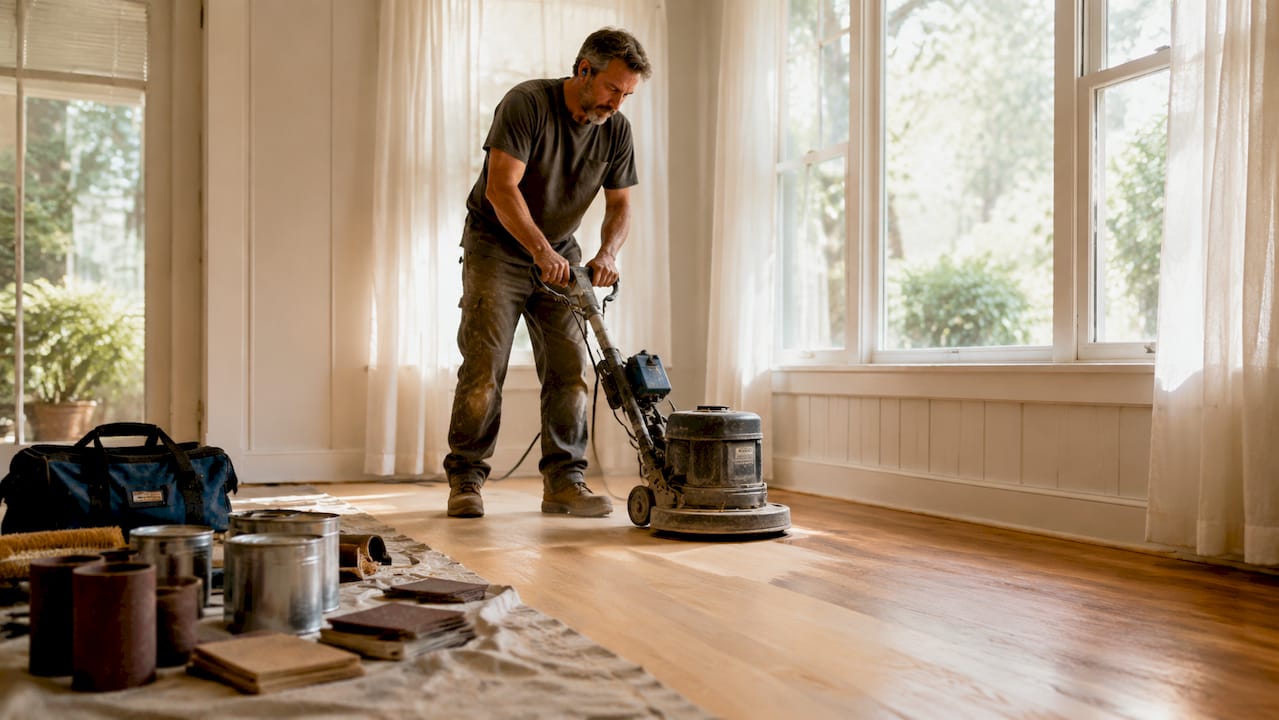
Solid hardwood is defined by one structural advantage no other flooring type can match: it can be sanded down and refinished multiple times over its lifetime. That single characteristic is the core reason why hardwood flooring longevity far exceeds laminate, luxury vinyl plank (LVP), and even engineered wood. A well-maintained solid hardwood floor lasts 100 years or more, while most synthetic alternatives need full replacement within 15–25 years. Understanding why hardwood outlasts other flooring types comes down to construction, refinishability, and consistent maintenance.
Why hardwood outlasts other flooring types: the construction advantage
Solid hardwood planks are milled from a single continuous piece of wood, top to bottom. That structure is what makes repeated refinishing possible. When the surface gets scratched, dented, or dulled, a sander removes a thin layer of wood and exposes fresh material underneath. The floor looks new again without replacing a single board.
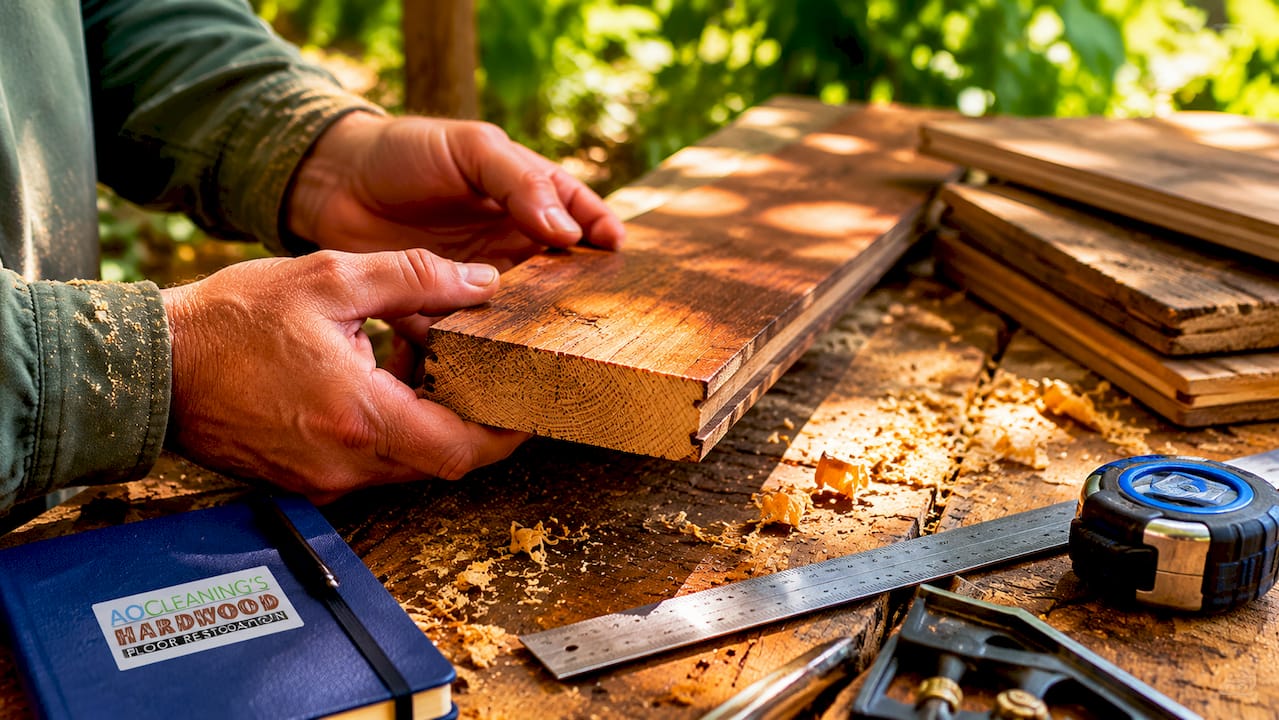
The math behind this is straightforward. A standard 3/4-inch solid hardwood plank holds enough thickness above its tongue-and-groove joint to allow 3–5 full refinishing cycles over its lifetime. Each cycle removes only a fraction of the total thickness. That means one floor installation can serve a home through multiple generations of wear.
Wood species hardness also plays a major role in how long a floor holds up between refinishes. Species like white oak and hickory score significantly higher on the Janka hardness scale than softer woods like pine. A harder species resists denting and surface wear longer, which means fewer refinishing cycles needed over the same period.
White oak and hickory: High Janka hardness scores; ideal for high-traffic areas
Red oak: The most common choice in American homes; good hardness with warm color tones
Maple: Dense and light-colored; popular in kitchens and commercial spaces
Pine: Softer and more prone to denting; better suited for low-traffic rooms
The key limitation on refinishing is remaining wood thickness above the structural joint. Sand too deep and the floor loses structural integrity. A professional measures this before every refinishing job to confirm how many cycles remain.
Pro Tip: Ask your flooring contractor to measure the remaining thickness above the tongue-and-groove before scheduling a refinish. This tells you exactly how many more cycles your floor can handle.
How does hardwood compare to laminate, LVP, and engineered wood?
The durability of hardwood floors becomes clearest when you put it side by side with the alternatives. The comparison is not just about surface toughness. It is about what happens when the floor gets worn down.
Flooring type | Typical lifespan | Refinishable? | Replacement trigger |
Solid hardwood | 50–100+ years | Yes, 3–5 cycles | Structural damage or full wear |
Engineered hardwood | 20–30 years | Limited by veneer thickness | Veneer fully worn through |
Laminate | 15–25 years | No | Surface wear or moisture damage |
Luxury vinyl plank (LVP) | 15–25 years | No | Wear layer depleted |
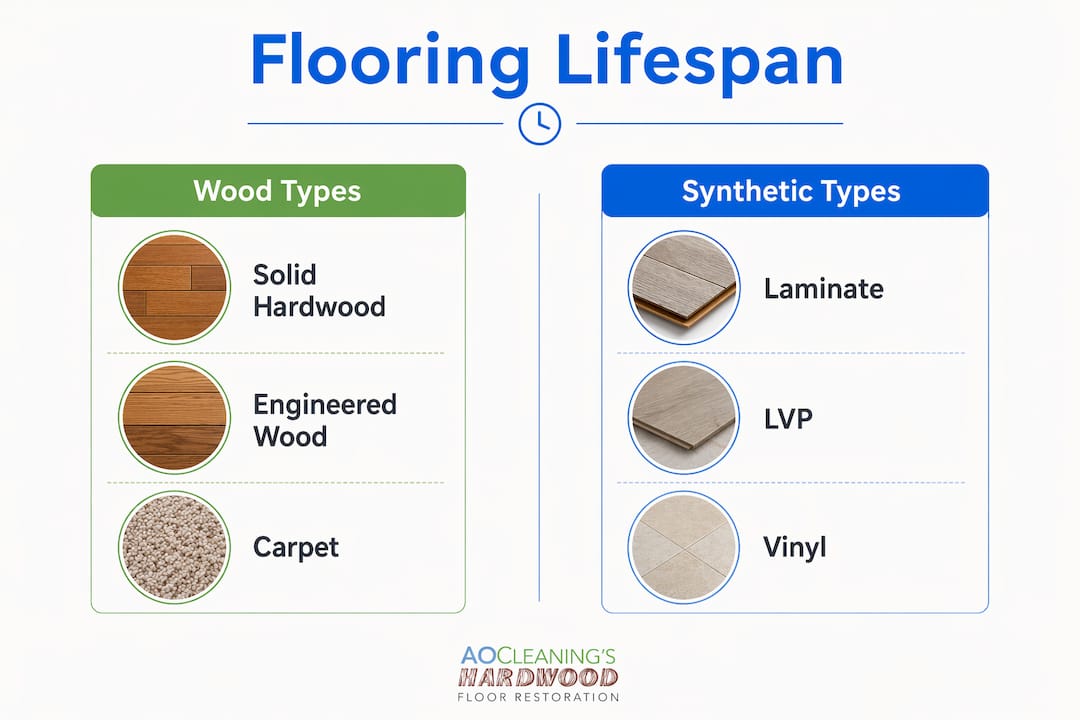
Laminate and LVP cannot be sanded or refinished. Once the wear layer is gone, the floor is done. There is no restoring it. You pull it up and start over. That replacement cost, paid every 15–25 years, adds up fast over the life of a home.
Engineered hardwood sits in the middle. It handles moisture better than solid hardwood because its plywood or HDF core resists expansion and contraction. That makes it a better fit for basements or areas with humidity swings. But engineered hardwood lasts 20–30 years on average because its real wood veneer is thin. Once that veneer is sanded through, refinishing is no longer possible. The floor must be replaced.
The hardwood vs carpet lifespan comparison is even more dramatic. Carpet in a busy household typically needs replacement every 8–12 years due to staining, fiber breakdown, and allergen buildup. Hardwood in the same home, properly maintained, outlasts multiple carpet installations without replacement.
The comparative durability of flooring across all types points to one consistent pattern. The ability to restore a floor’s surface, rather than replace the entire floor, is what separates hardwood from every other option.
What maintenance keeps hardwood floors lasting longer?
Refinishing is the single most powerful tool for extending hardwood flooring longevity, but it works best when paired with consistent everyday care. Neglect the basics and you will need to refinish sooner, or face damage that refinishing cannot fix.
Full refinishing, which involves sanding down to bare wood and applying new stain and finish, typically happens every 7–15 years depending on traffic and wear. Between those full refinishes, a lighter process called screening or buff-and-coat extends the finish life without removing deep wood layers. Screening refreshes the surface finish on floors showing light wear, buying more time before a full sand is needed.
Here is a practical maintenance sequence that protects your floor between professional services:
Sweep or dry-mop daily in high-traffic areas to remove grit that acts like sandpaper underfoot.
Use a pH-neutral hardwood cleaner weekly. Avoid steam mops and wet mops, which force moisture into the wood.
Control indoor humidity between 30–50% year-round. Humidity swings cause cupping and warping, which are the leading causes of premature floor failure.
Add felt pads under furniture legs and area rugs in high-traffic zones to reduce surface wear.
Schedule a screen and recoat every 3–5 years before the finish wears through to bare wood.
Get a professional assessment every 10 years to measure remaining thickness and plan the next full refinish.
Sunlight is an underrated threat. UV exposure fades and dries out wood finish faster than foot traffic in many homes. Curtains or UV-filtering window film in sun-heavy rooms can add years to a finish between refinishing cycles.
Pet claws and high heels concentrate pressure on small surface areas and accelerate wear. Harder wood species handle this better, but no species is immune. Rugs at entry points and pet nail trimming both reduce the rate of surface damage significantly.
Pro Tip: A whole-home humidifier connected to your HVAC system is the most cost-effective way to keep humidity stable year-round. It protects your floors, your woodwork, and your furniture at the same time.
Signs that a floor needs professional attention include deep scratches that catch a fingernail, gray or black staining from moisture, boards that feel soft underfoot, or finish that has worn through to bare wood. Widespread water damage and warped boards sometimes require replacement rather than refinishing. Catching problems early almost always keeps restoration as an option.
Is hardwood the right choice for every home?
Solid hardwood is the best flooring type for durability in most above-grade living spaces, but it is not the right fit for every room or every budget. Knowing the trade-offs helps you make a decision you will not regret in five years.
Upfront cost is higher. Solid hardwood costs more to install than laminate or LVP. That gap narrows significantly over time when you factor in replacement costs for synthetic floors.
Moisture-prone areas need a different approach. Solid hardwood expands and contracts with humidity. Bathrooms, laundry rooms, and below-grade basements are poor environments for solid wood. Engineered hardwood or tile are better choices in those spaces.
Long-term value is measurable. A solid hardwood floor that lasts 80 years with three refinishing cycles costs far less over that period than replacing laminate four times. The benefits of hardwood flooring show up most clearly in a long-term cost comparison.
Refinishing requires temporary displacement. A full sand and refinish takes the room out of use for a day or two. Screen and recoat services, like those offered by Aosaveswoodfloors, are often walkable in about three hours.
Common misconception: Many homeowners assume scratched or dull hardwood needs replacement. In most cases, a professional screen and recoat or full refinish restores the floor completely. Replacing floors prematurely is one of the most expensive mistakes homeowners make.
Engineered hardwood is a reasonable compromise when moisture is a concern but you still want real wood. Just go in with realistic expectations about its shorter refinishing window. LVP and laminate make sense in rental properties or spaces where budget is the primary constraint and longevity is secondary.
Key takeaways
Solid hardwood outlasts every other flooring type because its full-thickness wood construction allows repeated refinishing, restoring the surface for decades rather than requiring full replacement.
Point | Details |
Refinishability is the key advantage | Solid hardwood supports 3–5 full refinishing cycles, extending its life to 100+ years. |
Laminate and LVP cannot be refinished | Once their wear layer is gone, full replacement is the only option. |
Humidity control is non-negotiable | Keeping indoor humidity at 30–50% prevents cupping, warping, and premature failure. |
Screen and recoat extends finish life | This lighter service refreshes the surface between full sands and delays costly refinishing. |
Early action saves money | Addressing wear before it reaches bare wood keeps restoration possible and replacement avoidable. |
What 20 years of floors taught me about durability
After two decades of working on hardwood floors across central Illinois and the St. Louis metro area, I have seen one mistake repeat itself more than any other. Homeowners wait too long. They let a floor go past the point where a screen and recoat would have solved the problem, and now they need a full sand. Or they wait past that, and now the floor has moisture damage that forces replacement. Every delay costs more than the one before it.
The floors that last 80 or 100 years are not special. They are not made from exotic wood or installed by some legendary craftsman. They are ordinary red oak or white oak floors that got consistent care. Someone swept them regularly, kept the humidity stable, and called a professional when the finish started to look tired rather than waiting until the wood itself was damaged.
I also want to push back on the idea that hardwood is too expensive or too fragile for modern life. Hardwood floors handle everyday maintenance better than most homeowners expect. The floors that fail early almost always failed because of moisture neglect or because someone used the wrong cleaning products for years. The wood itself is not the weak link.
If you are buying a home with existing hardwood and it looks rough, do not assume replacement is the answer. Get a professional assessment first. The floor you think is ruined is often one refinishing cycle away from looking better than it did when it was new.
— Jim
Your hardwood floors may have more life left than you think
Aosaveswoodfloors has been restoring hardwood floors across St. Louis, Monroe, and Madison Counties since 2003. With over 450 Google reviews and more than 20 years of experience, the team knows how to read a floor and recommend the right level of service, whether that is a screen and recoat to refresh a tired finish or a full sand and refinish for floors with deeper wear.
Most restoration services are completed in a single day, with floors ready to walk on in about three hours. Before you pull up your floors and spend thousands on replacement, call Aosaveswoodfloors first. A professional refinishing service often costs a fraction of new installation and delivers results that last decades. Their tagline says it plainly: “Before you REFLOOR it, let us RESTORE it.”
FAQ
How long does solid hardwood flooring last?
Solid hardwood floors last 50–100+ years with proper maintenance and periodic refinishing. The key is preserving enough wood thickness above the tongue-and-groove joint to allow multiple sanding cycles.
Can hardwood floors be refinished more than once?
Yes. A standard 3/4-inch solid hardwood floor supports 3–5 full refinishing cycles over its lifetime. Each cycle removes a thin layer of wood and restores the surface to like-new condition.
How often should hardwood floors be refinished?
Full refinishing is typically needed every 7–15 years, depending on traffic and wear. A lighter screen and recoat every 3–5 years extends the finish life between full sands.
Why can’t laminate or LVP be refinished like hardwood?
Laminate and LVP are built from synthetic cores with a printed or photographic surface layer. That surface cannot be sanded without destroying the image underneath, so replacement is required once the wear layer is depleted.
What is the biggest threat to hardwood floor longevity?
Moisture is the primary threat. Humidity swings cause wood to expand and contract, leading to cupping, warping, and gaps that shorten the floor’s lifespan and limit refinishing options.
Recommended

Comments