


Floor Maintenance Routine Best Practices for Homeowners

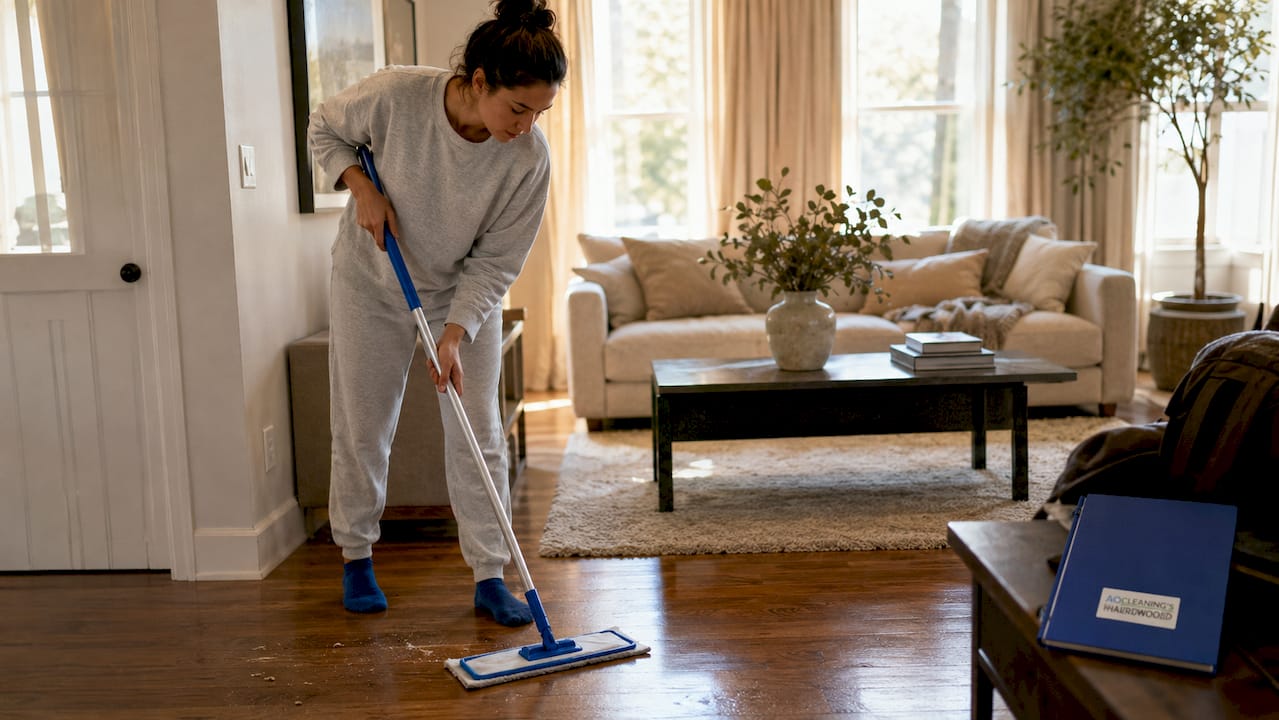
A floor maintenance routine built on daily dry cleaning, prompt spill response, controlled moisture, and preventive protection is the most reliable way to extend the life and appearance of any floor. Floor maintenance routine best practices apply across hardwood, tile, vinyl, and laminate surfaces, and the core principles stay consistent regardless of floor type. Tools like microfiber mops, pH-neutral cleaners such as Bona Hardwood Floor Cleaner, and felt furniture pads form the foundation of any effective home floor care system. Get these fundamentals right, and you can add years to your floors without expensive repairs.
1. Daily floor maintenance routine every homeowner should follow
The single most protective thing you can do for your floors is dry clean them every day. Fine grit and abrasive particles act like sandpaper underfoot, grinding away at your finish with every step. A soft-bristle broom or a flat microfiber dust mop picks up that debris before it causes damage.
Here is what a solid daily floor maintenance routine looks like:
Dust mop or sweep high-traffic areas every day using a flat microfiber mop or soft-bristle broom
Vacuum with a hardwood-safe setting (no beater bar) to pull fine particles from between planks
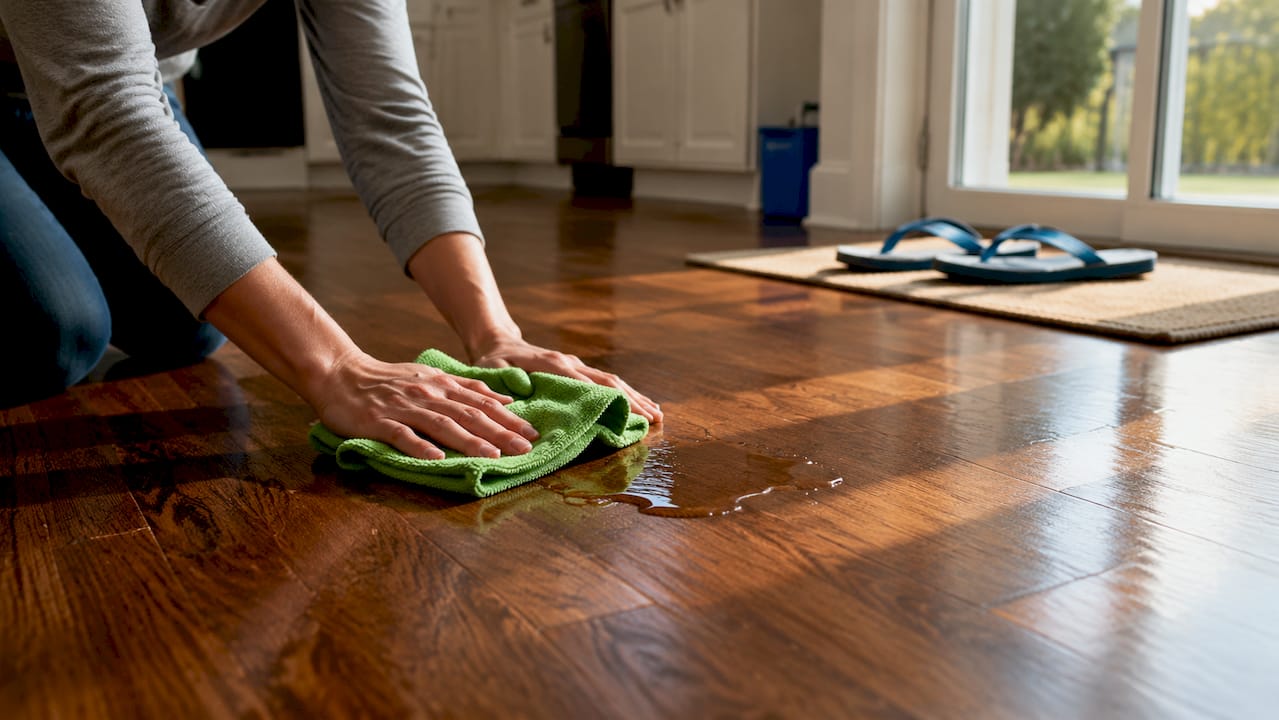
Spot clean spills immediately using a dry cloth first, then a lightly damp one if needed
Check entryways and kitchens daily since these zones collect the most debris
Prompt spill cleanup is non-negotiable. Liquids left on hardwood or laminate even for a few minutes can seep into seams and cause swelling. The goal of daily upkeep is not deep cleaning. It is removing the abrasive particles and moisture that cause the most cumulative damage.
Pro Tip: Hang your microfiber mop near the kitchen or main entryway so it is always within reach. A tool you can grab in 10 seconds gets used. One stored in a closet does not.
2. How often and how to wet mop your floors correctly
Wet cleaning done wrong causes more damage than skipping it entirely. The industry standard for hardwood and laminate is wet mopping one to two times per week using a barely damp microfiber mop. That means wrung out so thoroughly the mop feels almost dry to the touch.
The technique matters as much as the frequency:
Mop in the direction of the planks to avoid pushing water into seams
Use a pH-neutral cleaner formulated for your specific floor type, such as the AO Hardwood Neutral Cleaner
Avoid bleach, ammonia, and vinegar on hardwood and laminate finishes
Change your mop water every 200 to 300 square feet to avoid spreading dirty water back across clean floors
After mopping, your floor should dry within 30 seconds. If it takes longer, your mop is too wet. Standing moisture is the primary cause of seam swelling, warping, and finish clouding on hardwood and laminate. Tile and vinyl tolerate more moisture, but the same principle applies: wetter is not better.
Professional-grade flat microfiber mops control hydration far better than traditional string mops, which deposit far more water with each pass. If you are still using a string mop on hardwood, switching to a flat microfiber model is the single highest-impact upgrade you can make.
Pro Tip: For tile and vinyl, a mild dish soap solution works fine for weekly cleaning. For hardwood and laminate, always use a cleaner specifically labeled safe for those surfaces. Check the best cleaning products for hardwood before buying anything generic.
3. Preventive measures that protect floors and delay costly repairs
Prevention is cheaper than refinishing. The right accessories and household habits reduce wear dramatically before a mop ever touches the floor.
Entrance mats covering up to 15 feet at exterior doors trap grit and moisture before they reach your floors, reducing debris accumulation and delaying expensive refinishing
Felt furniture pads on all chair and table legs prevent micro-scratches; replace them every six months since worn pads become abrasive themselves
No-shoes policy indoors cuts tracked-in dirt by up to 80% of debris that would otherwise grind into your finish
Grout sealing on tile floors every one to two years prevents staining and moisture penetration into the subfloor
A no-shoes policy is the most cost-effective floor protection available to any homeowner. It requires zero products, zero tools, and zero ongoing expense. It just requires a habit.
These measures do not just protect the surface. They protect the finish underneath, which is far more expensive to restore than to maintain. A quality entrance mat at your front door and back door costs less than one hour of professional refinishing. The math is straightforward.
4. How floor maintenance needs differ by flooring type
Not all floors respond the same way to cleaning. Using the wrong technique on the wrong surface is one of the most common causes of premature floor damage. Here is a direct comparison of the four most common residential floor types:
Floor type | Cleaning frequency | Recommended cleaner | Common mistake |
Hardwood | Dry daily, wet 1-2x/week | pH-neutral hardwood cleaner | Too much water, vinegar use |
Laminate | Dry daily, wet 1x/week | pH-neutral laminate cleaner | Standing water, steam mops |
Tile | Dry 2-3x/week, wet weekly | pH-neutral or mild soap | Skipping grout sealing |
Vinyl | Dry 2-3x/week, wet weekly | Mild soap solution | Abrasive scrubbers |
Hardwood requires the most careful moisture management. Dust mop daily, wet mop with a barely damp microfiber mop, and dry the surface within 30 seconds. Laminate follows nearly the same rules but is even less forgiving of standing water since its core is wood-based composite.
Tile is the most forgiving surface for wet cleaning, but grout is its weak point. Unsealed grout absorbs stains and harbors bacteria. Sealing grout every one to two years is a non-negotiable part of any tile floor maintenance checklist. Vinyl tolerates mild soap solutions and occasional damp mopping, but abrasive scrubbers will leave micro-scratches that dull the surface over time.
For deeper guidance on hardwood-specific care, the techniques differ enough from other floor types to warrant their own approach.
5. Mistakes that shorten your floor’s life
Most floor damage is self-inflicted. These are the errors that show up most often and cost homeowners the most money.
Over-wetting the floor. Excess moisture causes hardwood and laminate to swell, warp, and separate at the seams. Use a barely damp mop and verify the floor dries within 30 seconds.
Using vinegar on hardwood. Many homeowners assume vinegar is a safe natural cleaner, but vinegar damages hardwood finishes permanently, causing clouding that cannot be reversed without refinishing.
Skipping dry cleaning. Going straight to wet mopping without removing grit first turns your mop into a scratch tool. Always dry clean before any wet cleaning.
Using too much cleaner. Excess soap creates residue that attracts more dirt and accelerates finish wear. Use the minimum recommended amount and dilute properly.
Ignoring early damage signs. Small scratches, dull patches, and lifting seams are warnings. Addressing them early with a screen and recoat or spot treatment costs far less than a full refinish.
Using steam mops on hardwood or laminate. Steam forces moisture directly into seams and voids most manufacturer warranties. Reserve steam cleaning for tile only.
Pro Tip: Start with the gentlest cleaning method and escalate only if needed. Factory finishes outperform any coating applied after damage occurs. Protecting the original finish is always the better investment.
The pattern behind most of these mistakes is the same: homeowners assume more is better. More water, more cleaner, more scrubbing. The opposite is true. Consistent, gentle cleaning done on schedule extends floor life more effectively than aggressive cleaning done occasionally.
Key takeaways
Consistent dry cleaning, controlled moisture, and preventive habits protect floor finishes more effectively than any single product or deep-cleaning session.
Point | Details |
Daily dry cleaning is non-negotiable | Sweep or dust mop every day to remove abrasive grit before it scratches the finish. |
Wet mop frequency and technique matter | Use a barely damp microfiber mop one to two times per week; floors should dry within 30 seconds. |
Prevention beats correction | Entrance mats, felt pads, and a no-shoes policy reduce wear before it starts. |
Match your cleaner to your floor type | pH-neutral cleaners protect hardwood and laminate; vinegar and bleach cause permanent damage. |
Catch damage early | Small issues like dull patches or lifting seams are far cheaper to fix before they spread. |
What 20 years of floor care taught me
Most homeowners treat floor cleaning as something they do when the floors look dirty. That mindset is the root cause of most premature floor damage I see. By the time a floor looks bad, the finish has already been compromised for months.
The homeowners whose floors last the longest are not doing anything complicated. They sweep every day, they mop with the right product once or twice a week, and they put mats at the door. That is it. The consistency is what separates a floor that looks great at 15 years from one that needs replacing at 8.
The tool investment also matters more than most people realize. A quality flat microfiber mop from a brand like O-Cedar or Bona costs under $40 and lasts years. A pH-neutral cleaner costs a few dollars per use. Compare that to the cost of refinishing, which runs several hundred dollars for an average room, and the math is obvious.
The one habit I push hardest is the no-shoes policy. It feels like a big ask, but 80% of the dirt that damages your floors walks in on the bottom of shoes. A basket of slippers near the front door solves the problem without making guests feel unwelcome. I have seen this single change extend the time between professional services by two to three years.
If your floors are already showing wear, do not assume replacement is the only option. A professional screen and recoat or a full floor restoration can bring them back without the cost or disruption of new installation.
— Jim
Restore your floors before you replace them
If your floors have gone past what regular maintenance can fix, Aosaveswoodfloors has been restoring hardwood floors across central Illinois and the St. Louis metro area since 2003. Their professional hardwood floor refinishing service covers everything from a light screen and recoat to a full sand and refinish, with most jobs completed in a single day and floors ready to walk on in about three hours. For homeowners who want to keep up with routine care between professional visits, the AO Hardwood Neutral Cleaner is a pH-neutral formula safe for hardwood and compatible with the maintenance routines covered in this article. Before you refloor it, let them restore it.
FAQ
What is the best daily floor maintenance routine?
Sweep or dust mop high-traffic areas every day using a flat microfiber mop or soft-bristle broom to remove abrasive grit. Follow up with immediate spot cleaning of any spills using a dry cloth.
How often should you wet mop hardwood floors?
Wet mop hardwood floors one to two times per week using a barely damp microfiber mop and a pH-neutral cleaner. The floor should dry within 30 seconds of mopping to prevent moisture damage.
Is vinegar safe to use on hardwood floors?
Vinegar is not safe for hardwood floors. It causes permanent finish clouding that requires professional refinishing to correct. Use a pH-neutral cleaner formulated specifically for hardwood instead.
What preventive measures protect floors the most?
Entrance mats at exterior doors, felt furniture pads, and a no-shoes indoor policy provide the most protection. A no-shoes policy alone prevents up to 80% of tracked-in dirt and grit.
When should a homeowner call a professional for floor care?
Call a professional when you notice dull patches that do not respond to cleaning, visible scratches in the finish, or lifting seams. Early intervention with a screen and recoat costs significantly less than a full refinish.
Recommended

Comments